
Computer science engineering (CSE) students might gain knowledge through theoretical studies, but it must be put into practice to get expertise. It can be done with final year projects for computer science and engineering. It allows you to get your hands on many technologies, acquire industrial knowledge, and span into different domains like artificial intelligence, data security, machine learning, and cybersecurity.
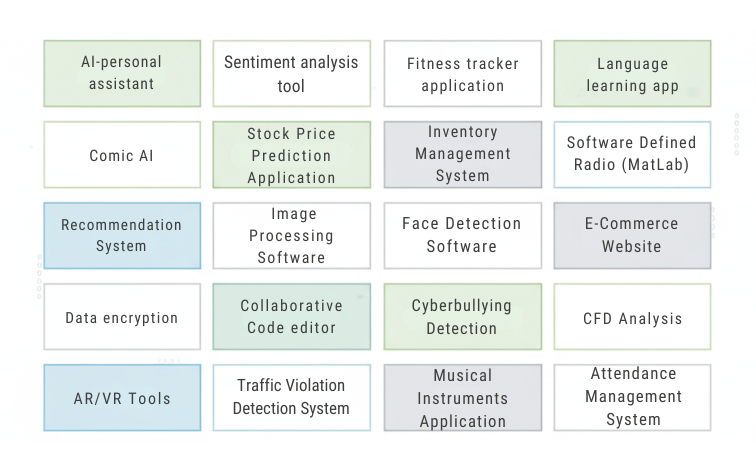
Some of the best final year project ideas for Computer science and engineering (CSE) students are AI-personal assistant, sentiment analysis, fitness tracker application, and language learning app. You can also combine your creativity to create an altogether new technology and application. In this article, we have enlisted 20 best final year project ideas for CSE students with brief descriptions and instructions.
Our Mahalakshmi Tech Campus teaching faculties encourage B.E Computer science engineering students to develop final year projects for computer science that improve the students skills and contribute to the society in some way. By doing this, our students will not only attain technical brilliance but also feel satisfied.
20 Best Final year project ideas for CSE Students
Below, we have listed the 20 best final year project ideas for Computer Science and Engineering (CSE) students with enough information to help the students to decide which CSE project they can devote their efforts to.
1. AI Personal Assistant
Project Overview
An AI-powered assistant that understands natural language commands and automates daily tasks like scheduling, reminders, answering queries, and controlling smart devices.
Key Features
- Voice & text interaction
- Calendar and reminder management
- Smart device control
- API integrations
Technologies & Tools
Python / JavaScript, NLP (spaCy, NLTK), Google Speech API, Whisper, TensorFlow, PyTorch
Skills Gained
Conversational AI, NLP, API integration, UX for voice apps
Real-World Impact
Improves productivity, enhances accessibility, supports elderly users
2. Sentiment Analysis Tool
Project Overview
A machine learning system that analyzes text data to detect emotional tone (positive, negative, neutral).
Key Features
- Text classification
- Sentiment scoring
- Dashboard analytics
- Real-time processing
Technologies & Tools
Python, NLP libraries, ML classifiers, Data visualization tools
Skills Gained
Text mining, feature engineering, model evaluation
Real-World Impact
Helps businesses analyze feedback, detects harmful content
3. Fitness Tracker Application
Project Overview
A mobile/web app to track workouts, calories, heart rate, and fitness goals.
Key Features
- Step counter
- Nutrition tracking
- Goal setting
- Progress analytics
Technologies & Tools
Flutter / React Native / Android, Firebase, Health APIs
Skills Gained
Mobile app development, sensor integration, UI/UX
Real-World Impact
Promotes healthy lifestyles, supports chronic care
4. Language Learning App
Project Overview
An AI-powered language learning platform with lessons, quizzes, and chatbot conversations.
Key Features
- Structured lessons
- Speech recognition
- Adaptive difficult
- Gamified learning
Technologies & Tools
Python / JS, Speech APIs, AI chatbots
Skills Gained
EdTech development, speech processing, adaptive learning
Real-World Impact
Breaks language barriers, expands global opportunities
5. Comic AI
Project Overview
A generative AI tool that creates comics using user prompts.
Key Features
- AI-generated illustrations
- Dialogue creation
- Custom art styles
Technologies & Tools
Python, Stable Diffusion, DALL·E, OpenCV
Skills Gained
Generative AI, creative ML, prompt engineering
Real-World Impact
Simplifies storytelling and creative content creation
6. Stock Price Prediction Application
Project Overview
A financial ML model predicting stock trends using historical data.
Key Features
- Time-series forecasting
- Risk analysis
- Market data integration
Technologies & Tools
Python, LSTM, ARIMA, Pandas
Skills Gained
Financial analytics, deep learning
Real-World Impact
Supports smarter investment decisions
7. Inventory Management System
Project Overview
A business system that tracks stock levels and automates reordering.
Key Features
- Stock tracking
- Low inventory alerts
- Warehouse management
Technologies & Tools
Java / Python / PHP, MySQL, ERP integration
Skills Gained
Enterprise software development, database optimization
Real-World Impact
Improves supply chain efficiency, reduces waste
8. Software Defined Radio (MATLAB)
Project Overview
A digital radio system implemented entirely through signal processing code.
Key Features
- Signal transmission & reception
- Modulation experimentation
- Frequency analysis
Technologies & Tools
MATLAB, DSP algorithms
Skills Gained
Wireless communication, RF engineering
Real-World Impact
Advances communication research and prototyping
9. Recommendation System
Project Overview
A personalized engine suggesting products or content based on user behavior.
Key Features
- Collaborative filtering
- Content-based filtering
- Hybrid recommendations
Technologies & Tools
Python, ML libraries, Big Data tools
Skills Gained
Data mining, behavioral analysis
Real-World Impact
Improves user experience and personalization
10. Image Processing Software
Project Overview
A system to enhance, analyze, and transform digital images.
Key Features
- Edge detection
- Image segmentation
- Compression & restoration
Technologies & Tools
Python, OpenCV, MATLAB
Skills Gained
Computer vision, image algorithms
Real-World Impact
Supports medical imaging and environmental monitoring
11. Face Detection Software
Project Overview
A system that detects and locates faces in images and videos.
Key Features
- Real-time face detection
- Facial landmark recognition
- Bounding box marking
Technologies & Tools
OpenCV, Python, CNN models
Skills Gained
Computer vision, neural networks
Real-World Impact
Enhances security and touchless authentication
12. E-Commerce Website
Project Overview
A full-stack web platform for online buying and selling.
Key Features
- Product catalog
- Secure checkout
- Payment gateway integration
Technologies & Tools
HTML, CSS, JS, React, Node.js, MySQL
Skills Gained
Full-stack development, security implementation
Real-World Impact
Empowers digital businesses and entrepreneurs
13. Data Encryption Tool
Project Overview
A cybersecurity tool that encrypts sensitive data.
Key Features
- AES/RSA encryption
- Secure key management
- Data integrity verification
Technologies & Tools
Python, Cryptography libraries
Skills Gained
Cryptography fundamentals, security protocols
Real-World Impact
Protects privacy and financial data
14. Collaborative Code Editor
Project Overview
A real-time multi-user coding platform similar to Google Docs for programming.
Key Features
- Live editing
- Cursor tracking
- Integrated chat
Technologies & Tools
React, Node.js, WebSockets, Monaco Editor
Skills Gained
Distributed systems, real-time app development
Real-World Impact
Enables remote collaboration and coding education
15. Cyberbullying Detection System
Project Overview
An AI system that detects harmful online content.
Key Features
- NLP-based content scanning
- Harassment detection
- Auto-flagging system
Technologies & Tools
Python, BERT, LSTM
Skills Gained
Ethical AI, NLP classification
Real-World Impact
Creates safer digital communities
16. CFD Analysis Software
Project Overview
A computational tool for fluid dynamics simulation.
Key Features
- Navier-Stokes equation solving
- Flow visualization
- Heat transfer simulation
Technologies & Tools
MATLAB / ANSYS / Python
Skills Gained
Numerical simulation, computational engineering
Real-World Impact
Improves design efficiency in aerospace & automotive
17. AR/VR Tools
Project Overview
Applications that create immersive augmented and virtual reality experiences.
Key Features
- 3D environment creation
- Real-world overlays (AR)
- Immersive simulations (VR)
Technologies & Tools
Unity, Unreal Engine, ARCore, ARKit
Skills Gained
3D programming, spatial computing
Real-World Impact
Transforms education, training, and therapy
18. Traffic Violation Detection System
Project Overview
A computer vision system that detects traffic violations automatically.
Key Features
- License plate recognition
- Speed detection
- Violation alert system
Technologies & Tools
Python, OpenCV, YOLO
Skills Gained
Real-time vision processing, AI deployment
Real-World Impact
Improves road safety and traffic monitoring
19. Musical Instruments Application
Project Overview
A digital music application simulating instruments and enabling music production.
Key Features
- MIDI support
- Sound synthesis
- Multi-track recording
Technologies & Tools
C++ / Python, Audio processing libraries
Skills Gained
Signal processing, real-time systems
Real-World Impact
Democratizes music creation and therapy
20. Attendance Management System
Project Overview
An automated system for tracking attendance using biometrics or face recognition.
Key Features
- Biometric/RFID integration
- Attendance reports
- Analytics dashboard
Technologies & Tools
Python / Java / Web stack, MySQL
Skills Gained
Full-stack development, system integration
Real-World Impact
Eliminates manual errors and improves transparency
Top Sites to Develop and Deploy Final Year Projects for CSE Students
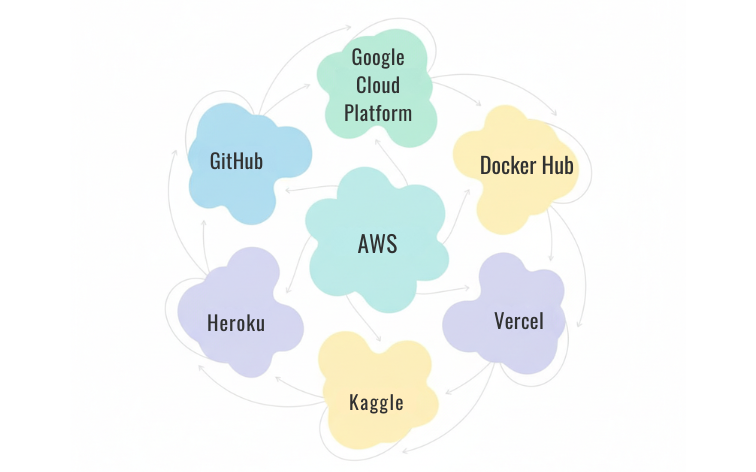
Below, we have listed some top sites to develop final year projects for CSE students:
GitHub
GitHub is the world’s largest code hosting and version control platform used by over 100 million developers worldwide. It provides a collaborative environment where you can store your project code, track changes, manage versions, and work with team members seamlessly. The platform uses Git for version control, allowing you to maintain a complete history of your project development. You can create public repositories to showcase your work or private repositories for confidential projects.
Google Cloud Platform (GCP)
Google Cloud Platform is a comprehensive suite of cloud computing services that runs on the same infrastructure Google uses for its own products like Search and YouTube. It offers powerful tools for hosting applications, storing data, running machine learning models, and analyzing big data. GCP is particularly strong for AI/ML projects with services like Vertex AI, pre-trained APIs for vision, language, and speech processing, and AutoML for custom model training. The platform includes Compute Engine for virtual machines, Cloud Storage for file storage, Cloud SQL for managed databases, Firebase for mobile app backends, and BigQuery for data analytics.
AWS (Amazon Web Services)
Amazon Web Services is the most widely adopted cloud platform in the industry, offering over 200 fully-featured services from data centers globally. AWS provides the infrastructure and tools needed to build virtually any type of application, from simple web apps to complex machine learning systems. Key services for student projects include EC2 (virtual servers), S3 (scalable storage), RDS (managed relational databases), Lambda (serverless computing), and SageMaker (machine learning). Through AWS Educate and AWS Academy, students get free credits and access to extensive learning resources without needing a credit card. AWS experience is highly valued by employers as it’s used by major companies worldwide, making it an excellent addition to your technical skill set.
Heroku
Heroku is a cloud platform-as-a-service (PaaS) that enables developers to build, run, and operate applications entirely in the cloud without worrying about infrastructure management. It’s particularly beginner-friendly because it abstracts away server configuration and focuses on application deployment. Heroku supports multiple programming languages including Python, Node.js, Ruby, Java, PHP, and Go, making it versatile for various project types. The platform excels at deploying web applications, RESTful APIs, data processing applications, and chatbots. Heroku’s free tier (though limited) allows you to host multiple projects simultaneously, with features like automatic HTTPS, integrated logging, and easy database provisioning through add-ons like Heroku Postgres.
Kaggle
Kaggle is the world’s largest data science and machine learning community, owned by Google, where over 10 million data scientists and ML engineers collaborate, compete, and learn. It’s an invaluable resource for CSE students working on AI, machine learning, data analytics, or predictive modeling projects. Kaggle provides free access to thousands of real-world datasets across diverse domains (healthcare, finance, climate, social media), cloud-based Jupyter notebooks with pre-installed ML libraries, free GPU and TPU computing resources for training models, and competitions where you can test your skills against others. The platform’s community publishes millions of notebooks with code examples, tutorials, and complete project implementations that you can learn from and adapt.
Vercel
Vercel is a cutting-edge cloud platform specifically optimized for frontend frameworks and static site generation, created by the developers of Next.js. It provides the fastest way to deploy modern web applications with automatic optimizations, global content delivery, and zero-configuration deployment. Vercel excels at hosting React, Next.js, Vue, Angular, Svelte, and static HTML/CSS/JavaScript projects with features like automatic HTTPS, instant rollbacks, preview deployments for every Git push, edge functions for serverless computing, and built-in analytics. The free tier is extremely generous for student projects, offering unlimited personal projects, 100GB bandwidth per month, and automatic SSL certificates.
Docker Hub
Docker Hub is the world’s largest repository for container images, serving as the central hub for containerized application distribution and deployment. Docker enables you to package your application along with all its dependencies, libraries, and configurations into standardized containers that run consistently across any environment—from your laptop to production servers. This “write once, run anywhere” approach eliminates the common problem of “it works on my machine but not on yours.” Docker Hub hosts millions of pre-built images for databases (MySQL, MongoDB, PostgreSQL), programming environments (Python, Node.js, Java), web servers (Nginx, Apache), and complete application stacks that you can use as building blocks for your project.
How to Produce Innovative Computer Science Projects?
Below, we have detailed five ways to produce innovative computer science projects:
1. Identify Real-World Problems in Your Community
Observe challenges in your surroundings—college campus, local businesses, healthcare facilities, or daily routines. Talk to potential users to understand their pain points and inefficiencies that technology could solve, ensuring your project addresses genuine needs rather than imaginary problems.
2. Combine Multiple Technologies or Domains Creatively
Merge different fields like AI with IoT, blockchain with healthcare, or computer vision with agriculture. Innovation often happens at the intersection of technologies, creating unique solutions that stand out from conventional single-technology approaches.
3. Start with Minimum Viable Product (MVP) and Iterate Based on Feedback
Build a basic working version with core functionality first, test it with real users, gather feedback, and improve iteratively. This agile approach produces better results than attempting to create a perfect system from day one.
4. Research Existing Solutions and Find Their Gaps
Study commercial products, open-source projects, and academic papers to identify limitations in current solutions. Focus on addressing specific gaps like affordability, accessibility, regional language support, or features missing in existing applications.
5. Use Open Source Libraries and Focus on Unique Value Addition
Use established frameworks and libraries for common functionalities, then concentrate your efforts on building innovative core features. Smart use of existing tools allows you to create sophisticated projects while focusing on what makes your solution truly unique.
Conclusion
Final year projects in Computer Science Engineering are more than academic requirements—they are gateways to innovation, practical skill-building, and career readiness. By engaging in projects across domains such as AI, cybersecurity, data science, and cloud computing, students can bridge the gap between theory and practice. These projects not only sharpen technical expertise but also foster creativity, problem-solving, and societal impact. Choosing the right project aligned with your interests and industry trends can greatly enhance your portfolio, making you stand out to future employers and paving the way for advanced learning opportunities.
Explore Project Guides for Other Engineering Streams
- Top 12 Mini Project Ideas for ECE Students
- Top 20 Mini Project Ideas for CSE Students
- Data Science Project Ideas for Final Year Students
- Top 15 Projects for EEE Engineering Students
- Top 25 Cybersecurity Projects for Students
- Best AI Project Ideas for Students