

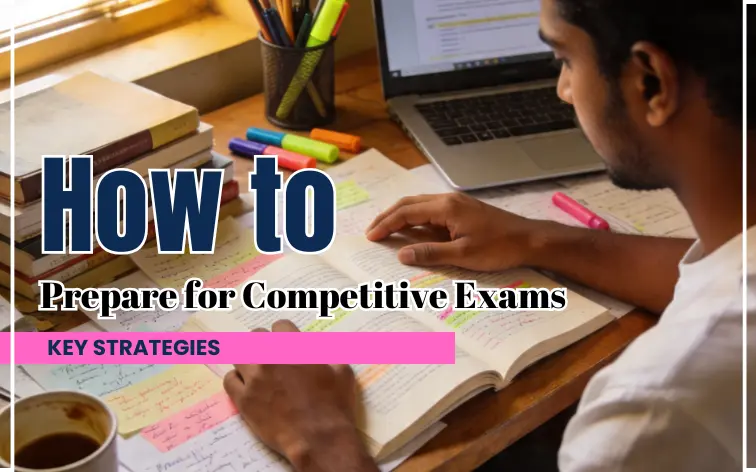
India is home to some of the most competitive exams in the world, including UPSC Civil Services, JEE (for engineering), NEET (for medicine), CAT (for MBA), SSC CGL, IBPS PO (for banking), CLAT (for law), and CUET, among others. These exams test a student’s knowledge, aptitude, and problem-solving ability, and the number of seats available makes the competition fierce. Every year, millions of students appear for these exams hoping to secure a seat in a top college or land a government job. Preparing for a competitive exam requires a well-structured strategy, as these exams often come with an extensive syllabus. A student who starts early, stays consistent, and follows the right approach is always better placed to succeed.
10 Key Preparation Strategies to Crack Competitive Exams
Cracking a competitive exam is not just about studying hard – it is about studying smart. Here are ten proven strategies that every student should follow to build a strong and effective preparation plan.
1. Understand the Syllabus and Exam Pattern Thoroughly
The first and foremost step in preparing for any competitive exam is to have a clear understanding of the syllabus. A thorough analysis of the syllabus and relevant study materials is crucial, as it helps in identifying strong and weak areas, allowing you to focus on subjects that need more attention. A student who knows the exam pattern – including the number of sections, marking scheme, and time limit – can plan their preparation far more effectively than someone who dives in without this clarity. Always download the official syllabus from the exam authority’s website and keep it as a reference throughout your preparation.
2. Set Clear and Achievable Goals
Set clear and achievable goals to motivate students to work efficiently and track progress, which builds confidence. Instead of stressing out, one can break larger tasks into smaller ones to learn easily – short milestones are easy to crack and promote a growth mindset. For example, rather than setting a vague goal like “study more,” aim for something specific such as “complete two chapters of Economics this week.” This kind of focused planning keeps a student on track and reduces the feeling of being overwhelmed.
3. Create a Realistic Study Schedule
A well-planned timetable is the backbone of competitive exam preparation. Design a daily, weekly, and monthly schedule with clear subject-wise targets. A student should divide time across all subjects while giving extra hours to weaker areas. Make sure the timetable is practical – one that you can actually follow – rather than an overly ambitious plan that falls apart within a week. Include breaks and revision slots in the schedule to keep the mind fresh and retention high.
4. Choose the Right Study Material
Quality study material plays a major role in the preparation of competitive exams. To choose the right material, follow recommended books, previous years’ question papers, mock tests, e-learning platforms, and prepare your own notes for revision. A student should avoid collecting too many books, which often leads to confusion. Stick to two to three trusted sources per subject, and supplement them with online resources and video lectures when needed.
5. Build Strong Fundamentals
Competitive exams require a strong foundation to understand and practice advanced topics. Subjects like Maths and Science need a core understanding of principles to increase efficiency. Learning from NCERT books, immediately clarifying doubts, and focusing on “why” help in answering basic-level questions before reaching complex ones. A student who has conceptual clarity will always find it easier to tackle tricky or unfamiliar questions in the actual exam.
6. Practice with Mock Tests and Previous Year Papers
Solving mock tests and previous year question papers is one of the most effective ways to prepare. Weekly mock tests and time-bound tasks are ideal ways to build exam readiness. This practice helps a student get comfortable with the exam format, identify gaps in knowledge, and improve speed and accuracy. Treat every mock test like the real exam – sit in a quiet place, follow the time limit strictly, and analyse your performance after each attempt.
7. Focus on Revision Regularly
To retain information, strategic revision is required, especially in competitive exams where the syllabus or content is longer. A student who revises regularly will remember topics far better than someone who reads them once and moves on. Use short notes, flashcards, and mind maps to make revision quicker and more effective. Set aside specific revision days in your weekly timetable so that previously covered topics do not get forgotten.
8. Manage Your Time During the Exam
Time management inside the exam hall is just as important as the preparation outside it. A student should practice answering questions within set time limits during mock tests so that managing time in the real exam becomes second nature. Learn to identify questions that can be solved quickly and attempt those first. Avoid spending too long on a single question – move on and come back to it if time permits.
9. Stay Consistent and Avoid Burnout
Preparation for a competitive exam is a long-term goal in which students need to maintain a consistent study routine. By setting a dedicated space and time for each subject, avoiding distractions, taking breaks while studying, and rewarding yourself for completion, you can maintain consistency. A student who studies for a moderate number of hours every single day will always outperform someone who studies intensely for a few days and then takes a week off. Consistency, not cramming, is the real key.
10. Take Care of Your Mental and Physical Health
A healthy body requires timely sleep, good food, and learning without stress or burnout. One must sleep 7 to 8 hours, perform physical exercise or yoga, and practise meditation for focus while staying hydrated. Competitive exam preparation can be stressful, so taking regular breaks to avoid burnout and maintaining a positive mindset – while believing in your abilities – is equally important. A student who looks after their health will find it much easier to stay focused and motivated throughout the preparation journey.
If you are still in college preparing for semester exams, our expert guide on how to write answers in semester exams can help!
Step by Step Preparation Process to Start Today
Getting started is often the hardest part. Here is a simple, actionable process that any student can follow from day one to get their preparation on track:
- Step 1 – Identify your target exam: Decide which exam you are preparing for based on your career goal, educational qualification, and interest area.
- Step 2 – Download the official syllabus: Visit the official exam website and download the latest syllabus and exam pattern. Read it carefully before anything else.
- Step 3 – Assess your current level: Take a diagnostic test or go through previous year papers to understand where you stand and which topics need the most attention.
- Step 4 – Gather the right study material: Select recommended books, trusted online resources, and previous year question papers for each subject in the syllabus.
- Step 5 – Build a study timetable: Create a daily and weekly schedule that covers all subjects, includes revision time, and allows for adequate rest.
- Step 6 – Start with the basics: Begin with foundational concepts before moving to advanced topics. Do not skip chapters thinking they are unimportant.
- Step 7 – Solve mock tests regularly: Start attempting mock tests at least once a week after covering the initial portions. Gradually increase the frequency as the exam approaches.
- Step 8 – Review and revise consistently: Dedicate time each week to revising what you have already studied. Keep short notes for quick revision closer to the exam.
- Step 9 – Track your progress: Review your performance after each mock test, note down weak areas, and adjust your study plan accordingly.
- Step 10 – Stay updated and stay motivated: Follow official notifications, connect with fellow aspirants or mentors, and keep reminding yourself of the goal you are working towards.
Conclusion
Preparing for competitive exams in India is a serious commitment, but it is completely achievable with the right approach. A student who understands the syllabus, builds a disciplined routine, practices regularly, and takes care of their health is well on their way to success. There is no single shortcut that works for everyone – what matters most is consistency, clarity of purpose, and the willingness to keep improving. Start today, stay focused, and take it one step at a time. Success will follow.