Date: 21 August 2026
Resource Person: Prof. Dr. Ushaa Eswaran
Principal, Mahalakshmi Tech Campus, Chennai
1. Introduction
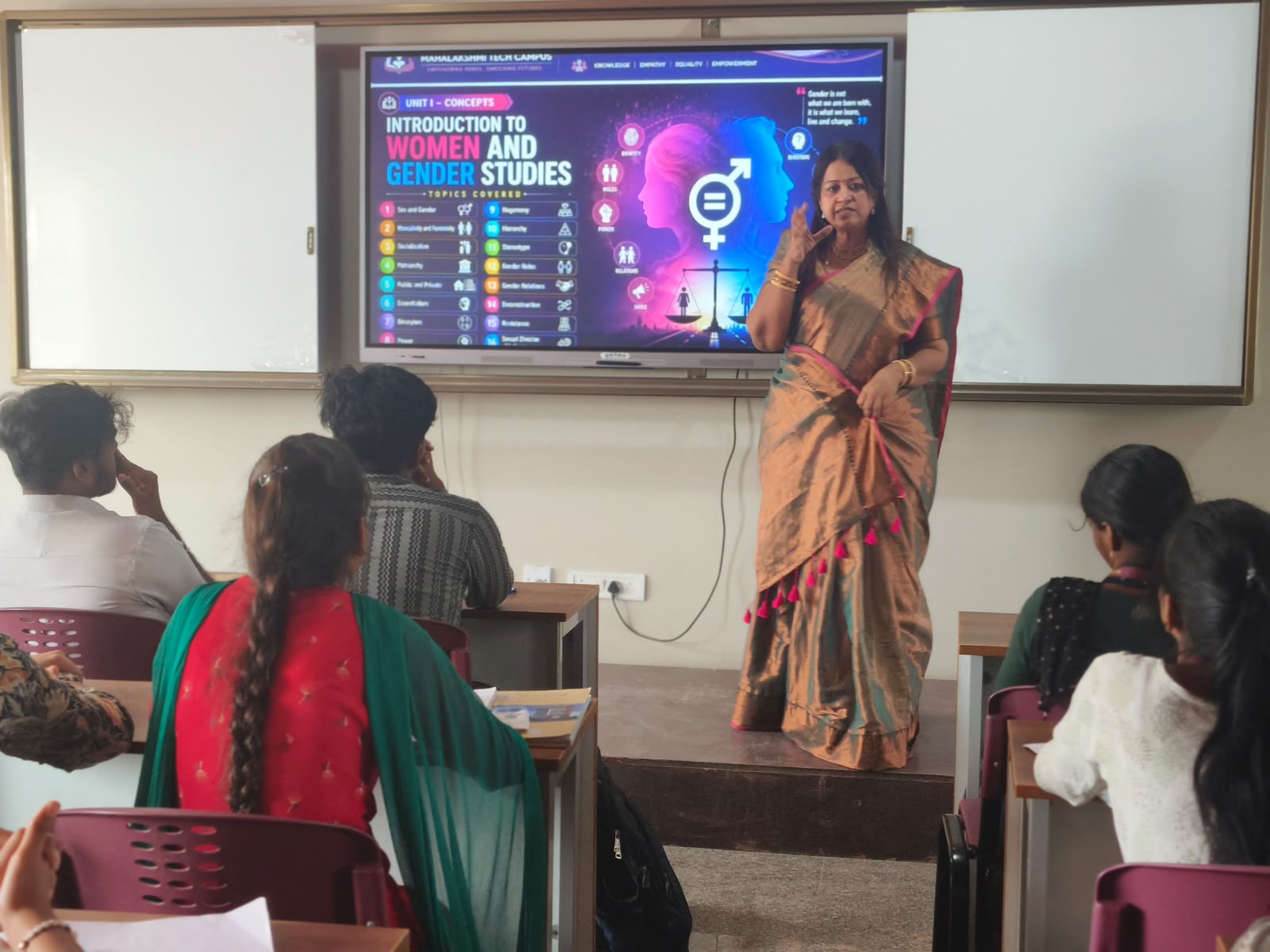
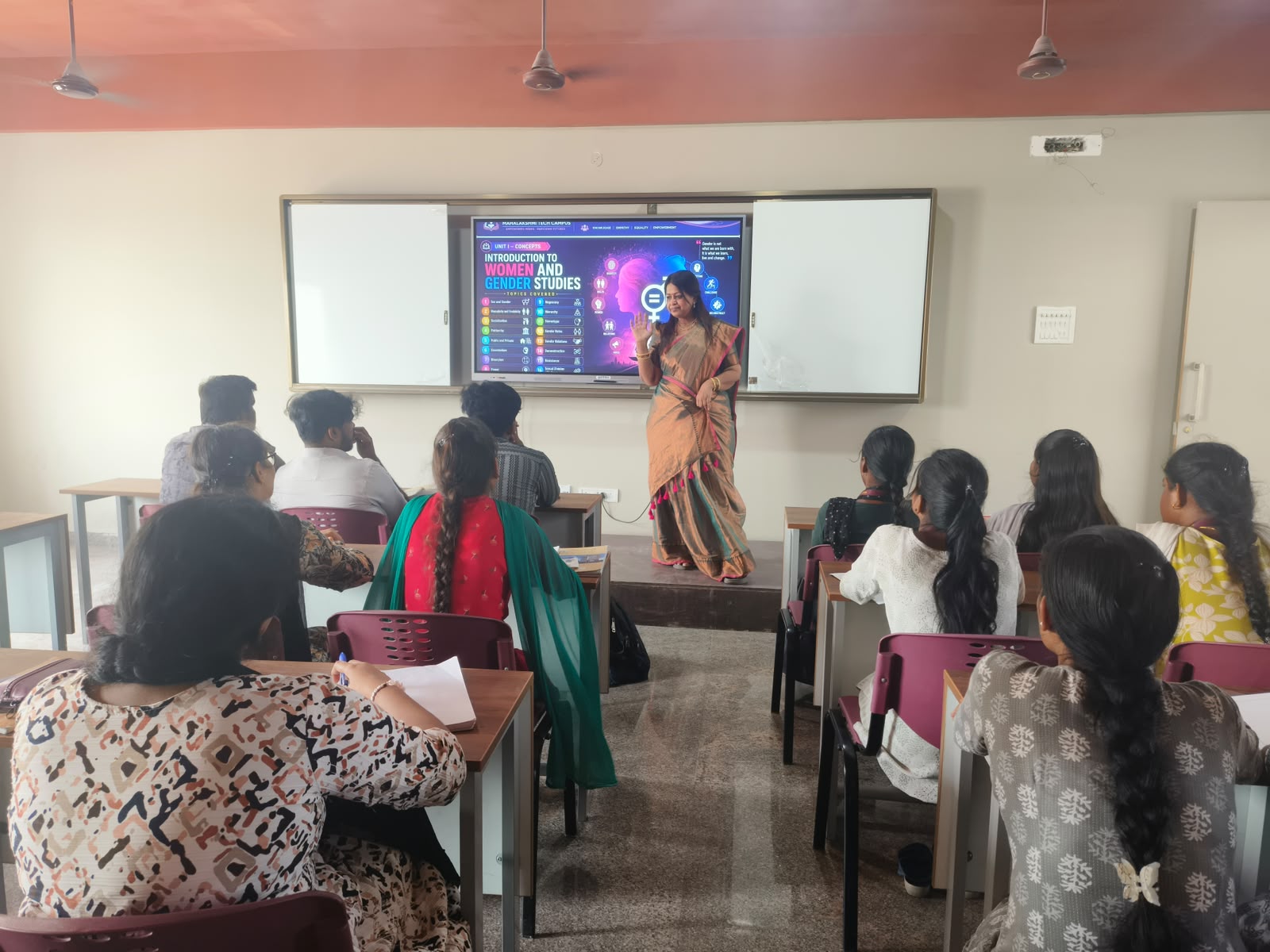
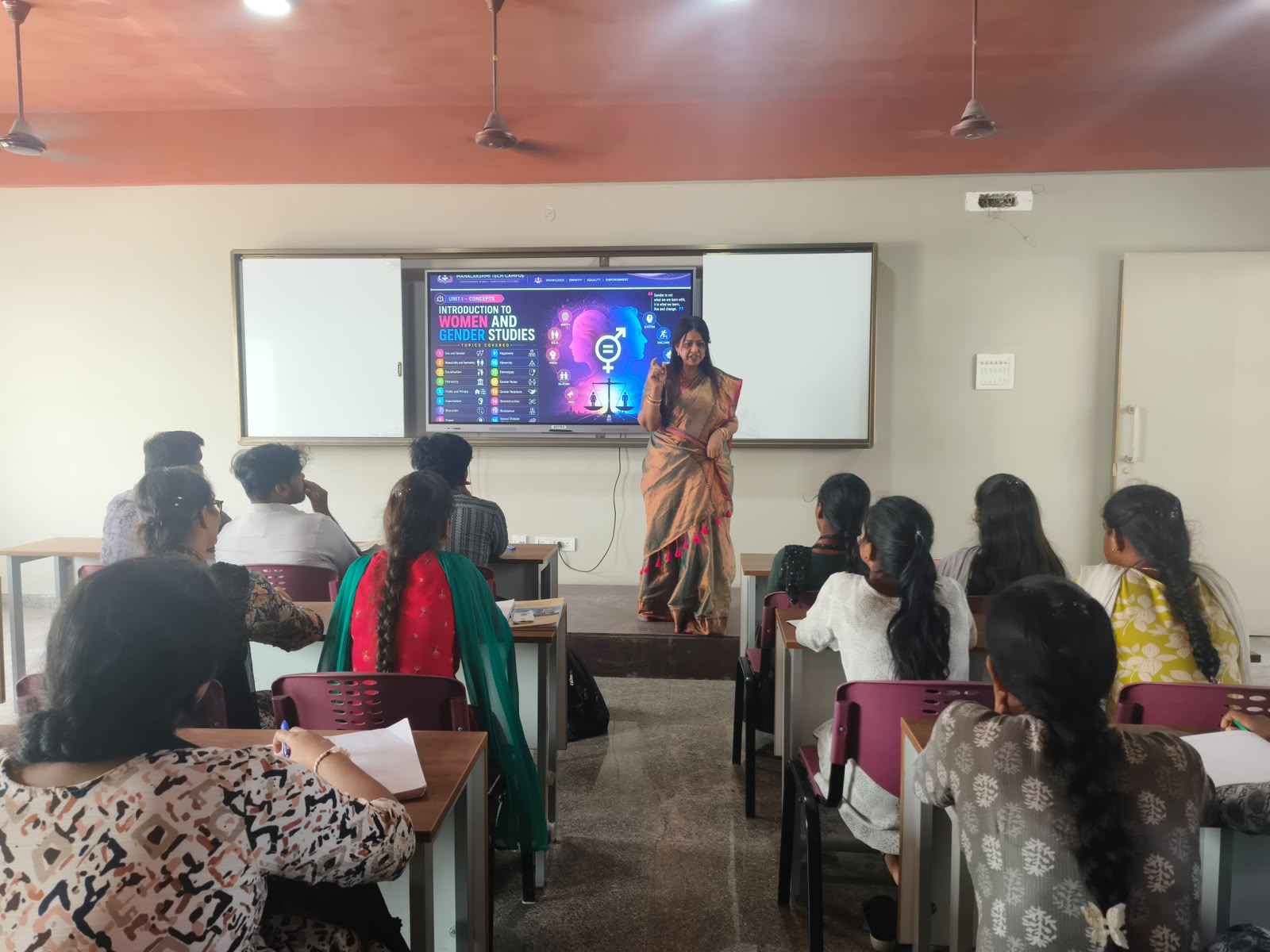
A Gender Sensitisation Workshop was conducted for the students of Mahalakshmi Tech Campus on 21 August 2026, with the objective of developing awareness and understanding of gender, gender roles, social expectations, power relations and the ways in which gender influences everyday life.
The session was conducted by Prof. Dr. Ushaa Eswaran, Principal, Mahalakshmi Tech Campus, as part of the learning objectives of MX3081 – Introduction to Women and Gender Studies (R21).
2. Objectives of the Workshop
The workshop aimed to:
Create awareness about the distinction between sex and gender.
Help students understand how gender expectations are socially constructed.
Examine traditional gender roles and stereotypes.
Introduce students to concepts of patriarchy, power, hegemony and hierarchy.
Encourage students to critically question assumptions about men and women.
Develop sensitivity towards gender equality and inclusivity.
Enable students to recognise gender-based expectations in family, education, workplace and society.
Encourage students to respect individual choices, abilities and aspirations irrespective of gender.
3. Topics Covered
The following concepts were discussed during the workshop:
Sex and Gender – Understanding the distinction between biological characteristics and socially constructed gender expectations.
Masculinity and Femininity – Examining characteristics and behaviours traditionally associated with men and women.
Socialization – Understanding how family, school, peers, media and culture influence gender expectations.
Patriarchy – Understanding gendered systems of authority, power and control.
Public and Private – Examining the traditional division between public roles and domestic responsibilities.
Essentialism – Questioning the assumption that men and women possess fixed, inherent characteristics.
Binaryism – Understanding how complex human experiences can be simplified into rigid categories.
Power – Examining the ability to influence decisions, resources, opportunities and behaviour.
Hegemony – Understanding how dominant ideas become accepted as normal or common sense.
Hierarchy – Examining levels of status, authority and power within social structures.
Stereotype – Identifying generalized and oversimplified beliefs about gender groups.
Gender Roles – Understanding socially expected behaviours, responsibilities and activities.
Gender Relations – Examining relationships shaped by gender expectations, roles and power structures.
Deconstruction – Critically questioning assumptions that are treated as natural or unquestionable.
Resistance – Understanding ways in which individuals and groups challenge unequal gender expectations and structures.
Sexual Division of Labour – Examining the traditional allocation of work based on gender.
4. Methodology
The workshop followed an interactive and discussion-oriented approach rather than merely presenting definitions. Students were encouraged to examine familiar situations from family, education, workplace and society and identify the gender expectations operating within them.
Examples, classroom questions, comparisons and reflective activities were used to help students connect theoretical concepts with real-life experiences.
5. Key Learning Outcome
The workshop emphasised that gender is not merely about biological differences but also involves social expectations, roles, relationships and structures of power.
Students were encouraged to move beyond stereotypes and understand that:
“Gender should not determine an individual’s personality, ability, opportunities or aspirations.”
The session also highlighted the importance of creating an environment based on respect, equality, dignity, freedom of choice and shared responsibility.
6. Conclusion
The Gender Sensitisation Workshop provided students with an opportunity to critically understand gender-related concepts and recognise how social expectations can influence individual choices and opportunities. The session encouraged students to question stereotypes, respect differences and contribute towards creating a more equitable, inclusive and gender-sensitive society.
The workshop was successfully completed with active participation and engagement from the students.